Caring in America
With Podcast Host: Richard Wexler
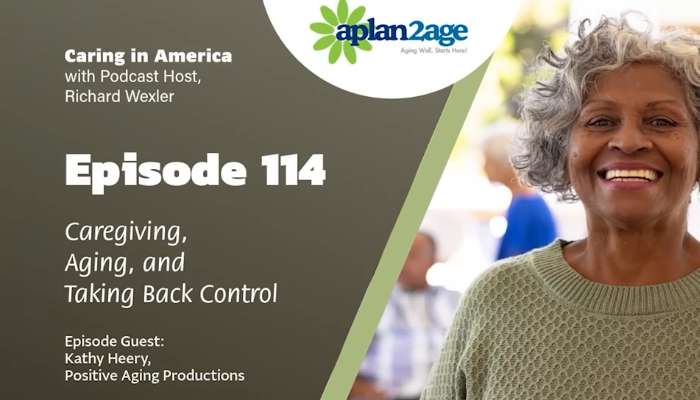
Episode 114
EP 114: Planning for Care Before Crisis Hits
A Conversation with Kathy Heary on Caregiving, Aging, and Taking Back Control
For those of you who have been with me for a while, you know my story. About 20 years ago, I was minding my own business in the software industry- married later in life, two small kids- when everything changed. In the summer of 2005, the phone started ringing. Before we knew it, my wife and I were caring for all four of our parents.
We thought they were doing well.
They weren’t.
That caregiving journey lasted 14 years, until the final parent passed at 96 in 2019. Back in 2005, I could barely spell the word care. That experience ultimately led me to leave the software world, start my first company, Points of Life, and begin educating families about aging, caregiving, and planning- first across Northern California, and eventually across the country.
That journey also led to this podcast, and more recently, to the launch of our national nonprofit, APlan2Age.
A Guest Who Has Walked Both Sides of the Street
In Episode 114, I had the pleasure of speaking with Kathy Heery, RN, BA, Master’s prepared communicator, writer, and producer with more than 45 years in healthcare and aging services. Kathy runs Positive Aging Productions, and her background is as deep as it is diverse.
She began her career as an ICU nurse, spent decades in geriatric care management, and has traveled nationally and internationally sharing her expertise through books, videos, and educational programs. But like so many of us in this space, Kathy’s professional work is inseparable from her personal caregiving journey.
She became a family caregiver in her 30s, caring for both parents over a 10-year period while raising children and building a career. More recently, she completed another caregiving journey with her sister, who passed away last year.
As Kathy shared, “I’ve been on both sides of the street.” And that lived experience shapes everything she does today.
The Call No One Is Prepared For
One of the most powerful parts of our conversation centered on how caregiving begins for most families—not with a plan, but with a crisis.
A phone call.
A text.
Something happened to mom. Dad fell. A sibling’s health suddenly declines.
Like many families, Kathy assumed early on that the healthcare system would “take care of it.” What she quickly learned—something I’ve seen again and again—is that the difference between acute care and long-term care is rarely explained, and the responsibility for managing everything in between falls squarely on the family.
Hospital stays. Rehab. Discharge planning. Medications. Appointments. Legal and financial decisions. Housing. Safety. Coordination.
And no one prepares you for how big the role really is.
Most Caregivers Don’t Even Identify as Caregivers
We talked about the AARP statistic that estimates 63 million caregivers in the U.S., with roughly 61% being women. I’ve said before-and I’ll say it again- I believe those numbers are extremely conservative.
Why? Because most people don’t even recognize themselves as caregivers.
They’re spouses.
They’re daughters.
They’re sons.
They’re siblings “just doing what family does.”
As Kathy described it, caregiving often looks like the “boiled frog” scenario—the responsibilities increase slowly over time until one day, you realize you’re exhausted, overwhelmed, and possibly sick yourself.
Care Is More Than Helping with Daily Tasks
One of the biggest misconceptions about caregiving is that it’s just about helping someone eat, bathe, or get to bed. In reality, those tasks are just the tip of the iceberg.
Kathy shared her framework of the 10 domains of aging, which include:
-
Financial planning
-
Insurance decisions
-
Housing and living arrangements
-
Health vs. medical status (they are not the same)
-
Legal considerations
-
Social support
-
Daily functioning
-
Safety
-
Future planning
-
Care coordination
Most families focus on one issue at a time, often choosing a single service that addresses one problem—usually at great expense—without understanding how everything connects. Insurance often doesn’t cover it, and by the time help is sought, the situation has already cascaded.
As Kathy put it, she kept trying to move “further and further upstream” to help families prevent repeat crises rather than constantly reacting to them.
The Myth That “Someone Else Will Handle It”
One theme that came up repeatedly was the belief—spoken or unspoken—that somehow, magically, things will take care of themselves.
That the hospital will outline a plan.
That Medicare will pay for long-term care.
That Medicaid will be an option for most families.
That someone else will explain the costs, the options, and the consequences.
The truth is harsh, but necessary to hear:
Medicare does not pay for long-term care.
Most people will not qualify for Medicaid.
And very few professionals are trained to look at the full picture of aging and caregiving.
This lack of education is one of the biggest reasons we started A Plan to Age—to create national conversations and help families understand what’s coming before they’re in crisis.
Helping People Help Themselves
When I asked Kathy to sum up her mission, her answer was simple and powerful:
“To help people help themselves.”
She reframes aging not as a disease or medical condition, but as a life transition—much like the transition from childhood to adulthood. And just like that earlier transition, aging requires planning, support, and education.
One of the biggest fears people have is that if they let someone “look under the hood,” they’ll lose their independence, their privacy, or be forced into a situation they don’t want. That fear keeps people from asking questions—and keeps families stuck in crisis mode.
Kathy’s Advice for Families
As we wrapped up the episode, Kathy offered advice I wholeheartedly agree with:
Before you make a costly decision about anything, speak with someone who has independent knowledge of aging, geriatrics, or gerontology. Don’t jump on the bandwagon—especially when something is being pushed as “free.”
A bad decision made in crisis can follow a family for years.
Planning Doesn’t Make Care Easy- But It Makes It Easier
Caregiving will never be easy. But having a plan—one that evolves as life changes—can significantly reduce anxiety, confusion, and regret when crisis hits.
As Kathy said, when you’ve done some planning, you at least have a place to start. No plan is perfect. But even an imperfect plan is better than none at all.
If this conversation resonated with you, I encourage you to start asking questions now—before you get that phone call.
And if you want to learn more about Kathy and her work, you can find her at PositiveAgingProductions.com.
Until we talk again, have yourself an awesome day.
With Special Guest: Kathy Heery
Subscribe for updates
Enjoying our podcast? Subscribe to be notified of new episodes when they come out.

Our country is entering a new chapter, one we have never seen before… over 100 million people are 50 years of age or older, and the need for care is going to be more and more prevalent. We are dreaming of a nation where aging and care are understood and become part of our normal conversations with family.
To make this a reality, we need your help!